

What Are The 3 Basic Rules of Self-Defense?
When people think about self-defense, they often imagine complex moves or high-level martial arts training. But real self-defense starts long before any punch or block. No matter which system you study, Krav Maga, boxing, jiu-jitsu, or any other style, the core idea is the same: stay safe and go home.
Most experts agree that effective self-defense can be understood through three simple rules:
- Avoid the danger.
- Use your voice and set boundaries.
- Defend yourself only if you must.
These rules work for everyone, from beginners to trained students in systems like Krav Maga. They help you stay calm, make smart choices, and protect yourself the right way.
Let’s break them down in an easy, practical way.
1. Avoid the Danger

The most important rule of self-defense is simple: don’t be there when trouble happens.
Avoiding danger does not make you weak. It makes you smart. In Krav Maga, this idea is taught from day one; awareness and distance can prevent most attacks before they even start.
What avoiding danger looks like:
- Staying in well-lit areas at night
- Trusting your instincts when something feels off
- Avoiding shortcuts through empty places
- Leaving early if someone is acting aggressive
- Keeping your hands free and your phone away when walking
In real-life self-defense, the best “move” is often not giving an attacker a chance. You win by staying safe, not by fighting.
2. Use Your Voice and Set Boundaries
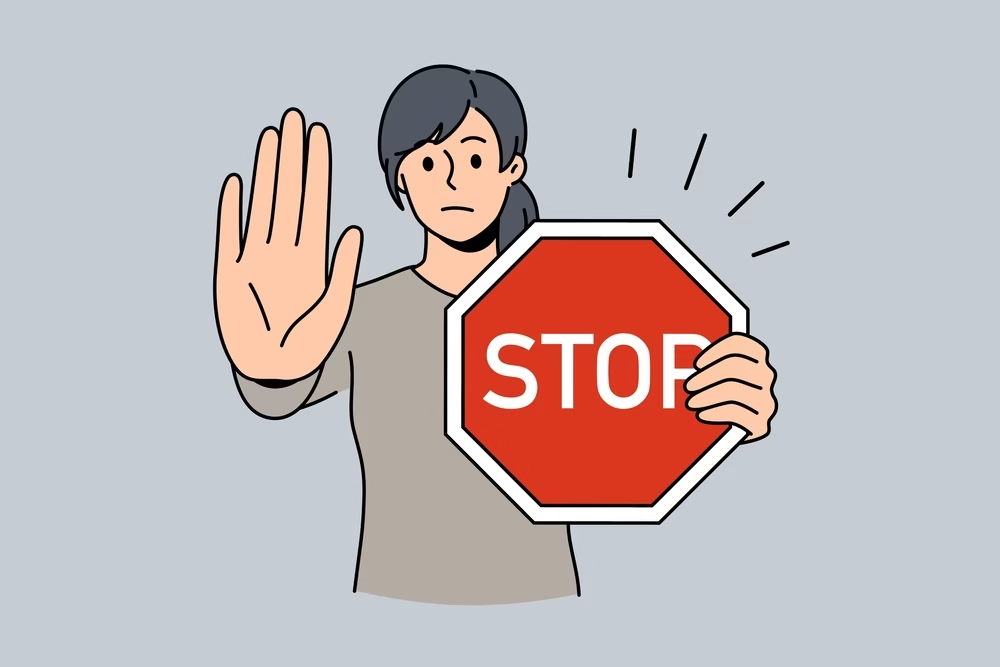
If you cannot avoid a situation, the next rule is to take control early using your voice.
Many attacks begin with someone testing your reaction, getting too close, grabbing your arm, or trying to intimidate you. A strong voice can prevent this from escalating before it gets physical.
How to use your voice:
- Say “Stop!” or “Back up!” with a firm tone
- Hold your hands up in a “ready” position without looking aggressive
- Tell someone clearly that their behavior is not okay
- Ask for help if you feel unsafe
In martial arts and Krav Maga, students practice verbal commands along with physical techniques. This helps you stay calm and alert, and shows the other person that you are not an easy target.
Your voice is a tool. Use it early.
3. Defend Yourself Only If You Must
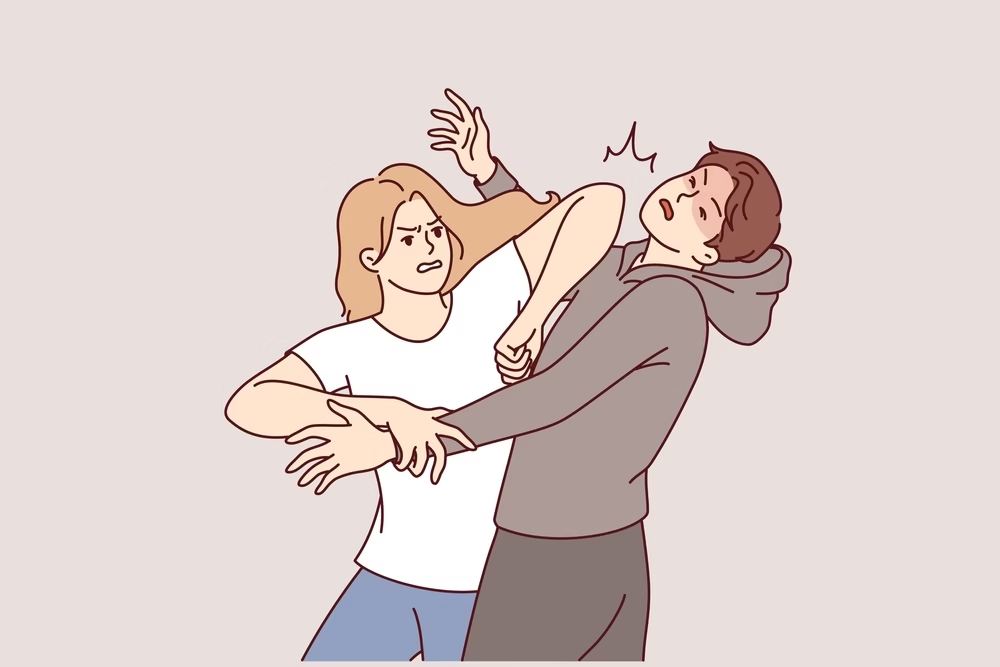
If you cannot avoid the danger and your voice doesn’t work, then you follow the third rule:
defend yourself to escape and get to safety.
This does not mean fighting to “win.” Real self-defense is not about pride or competition. It is about stopping the threat long enough to get away.
Krav Maga and practical martial arts follow the same idea—quick, simple action to escape, not long fights.
What defending yourself may include:
- Striking weak targets (eyes, nose, groin, throat)
- Breaking grips or holds
- Pushing the attacker away to create space
- Running as soon as you can
Your goal is not to stay and fight. Your goal is to survive.
Self-defense teaches that you only use physical force when you have no other choice. And when you do, you act with speed, commitment, and a clear path to escape.
Why These Three Rules Matter
These rules match how real danger works. Most attacks happen fast, without warning. Fancy moves may not work under stress, but simple steps do:
- Stay aware
- Use your voice
- Defend only when needed
Systems like Krav Maga build training around these ideas because they work for anyone—men, women, teens, or beginners.
You don’t need years of martial arts experience to follow these rules. You just need clear thinking and practice.
A Quick Example
Imagine you’re walking to your car at night and someone starts moving toward you aggressively.
- Avoid – You change direction and move toward a group of people.
- Voice – The person follows, and you say, “Stop. Don’t come closer.”
- Defend – They keep coming and grab your arm. You break the grip, strike the weak point, and run.
This simple chain of actions can protect you in real life.
Final Thoughts
Self-defense is not only about punches and kicks. It’s about choices, awareness, and knowing what to do before things get dangerous.
If you train in Krav Maga or another martial art, keep these three rules in mind. They guide every technique and every decision. And even if you never step into a gym, these rules can still help you stay safe in daily life.