

Krav Maga Belts System Explained: From White to Black
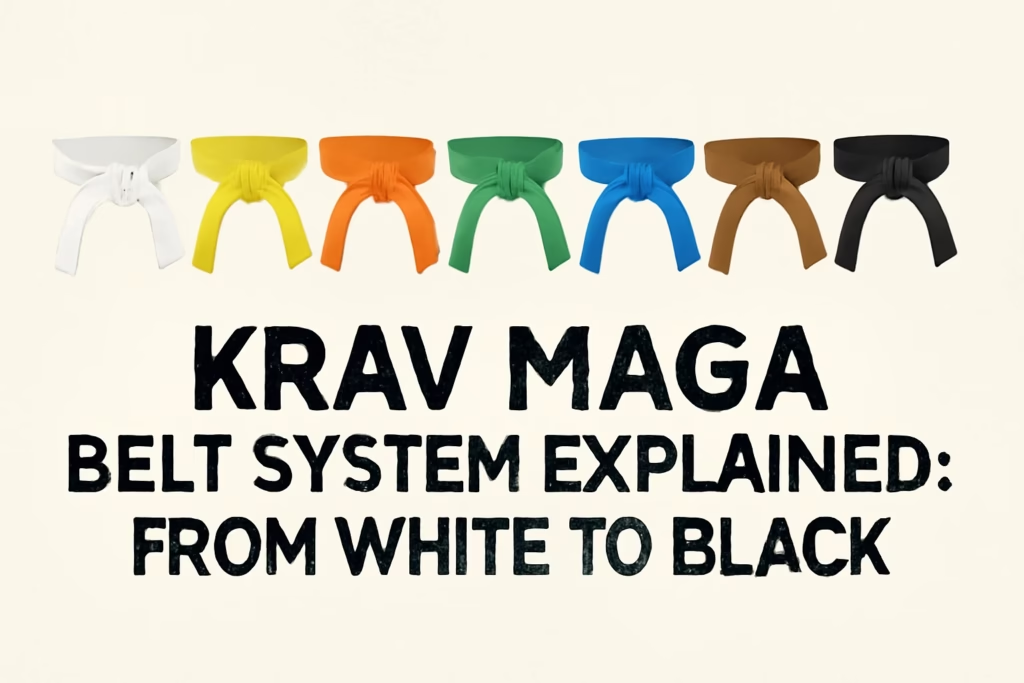
At Guardian Krav Maga LLC, students often ask: “How does the Krav Maga belts system work?”
This guide explains everything — from your first day as a white belt to what it takes to earn the coveted black belt.
Read More: What is Krav Maga?
If you’re new to Krav Maga, you’ve probably noticed that, unlike some traditional martial arts, belt systems can vary between schools. Some training centers use ranks, others focus on levels, and a few follow a hybrid approach.
What Makes the Krav Maga Belt System Unique?
The Krav Maga belt system is different from other martial arts for one big reason: it’s built for real-world self-defense, not competition.
While karate or taekwondo focus on form, technique, and performance, Krav Maga belts represent how well you can apply skills under stress — in real-life, unpredictable situations.
Each rank reflects more than your fighting ability; it shows your ability to:
- React instinctively to danger.
- Defend yourself and others effectively.
- Stay calm and think clearly under pressure.
- Use situational awareness and escape strategies.
Why Belt Ranks Exist in Krav Maga
Originally, Krav Maga didn’t have belts at all. It was a military system created by Imi Lichtenfeld for the Israeli Defense Forces (IDF).
But as Krav Maga spread worldwide, civilian schools added belt ranks to:
- Track progress.
- Set clear learning goals.
- Create structured training paths for students.
Understanding Krav Maga Levels and Belts
Depending on your training organization (IKMF, KMG, Krav Maga Global, etc.), the exact structure may vary slightly.
However, most Krav Maga schools — including Guardian Krav Maga LLC — follow this general system:
| Level | Belt Color | Stage Name | Focus |
|---|---|---|---|
| Level 1 | White | Practitioner 1 (P1) | Basic movements and defenses |
| Level 2 | Yellow | Practitioner 2 (P2) | Combatives and striking combos |
| Level 3 | Orange | Practitioner 3 (P3) | Intermediate defenses, ground skills |
| Level 4 | Green | Practitioner 4 (P4) | Multiple attackers, weapon awareness |
| Level 5 | Blue | Practitioner 5 (P5) | Advanced self-defense and fighting tactics |
| Level 6+ | Brown & Black | Graduate and Expert Levels | Teaching, leadership, mastery |
Let’s go through each one step-by-step.
White Belt – The Beginner’s Foundation
Every Krav Maga journey starts here.
The white belt is for complete beginners — no prior experience required.
What You’ll Learn
- Stances and movement: How to stand, balance, and move efficiently.
- Basic punches: Straight punch, hammer fist, and palm strike.
- Basic kicks: Front kick, groin kick, and roundhouse kick.
- Simple defenses: How to block punches, protect your head, and escape basic grabs.
- Situational awareness: Understanding your surroundings and avoiding conflict when possible.
Mindset for White Belts
At this stage, it’s not about power — it’s about learning control, precision, and reaction.
You’ll also begin building confidence in your body and mind.
Average Time to Yellow Belt: 3–6 months of consistent training.
Yellow Belt – Building Core Self-Defense Skills
After mastering the basics, you move to yellow belt (P2).
Here, your training becomes faster, more fluid, and more scenario-based.
What You’ll Learn
- Combinations: Linking punches and kicks together smoothly.
- Defenses against chokes and holds: Both standing and on the ground.
- Basic ground fighting: Escaping from underneath and regaining your footing.
- Stress drills: Learning to respond effectively under pressure.
- Basic weapon awareness: Introduction to knife and stick defenses.
Mindset for Yellow Belts
At this level, students begin to understand how to stay safe rather than how to win.
Guardian Krav Maga LLC emphasizes using minimum force necessary — and escaping danger whenever possible.
Average Time to Orange Belt: 6–12 months after earning yellow.
Orange Belt – Intermediate Krav Maga Skills
The orange belt marks a turning point.
You’ve developed the fundamentals — now it’s time to apply them dynamically.
What You’ll Learn
- 360° defense system: Defending against attacks from all directions.
- Ground control: Using leverage and positioning to escape or subdue attackers.
- Multiple attackers: Reacting when more than one person threatens you.
- Improvised weapons: Using everyday objects to defend yourself.
- Intermediate striking: Low-line kicks, elbows, and knee strikes.
Mindset for Orange Belts
This level introduces adaptability — reacting instinctively and adjusting to real situations.
It’s also when many students begin to assist in classes to refine their techniques by helping others.
Average Time to Green Belt: 12–18 months after orange.
Green Belt – Advanced Practitioner Level
The green belt signifies strong physical ability, endurance, and tactical understanding.
What You’ll Learn
- Fighting under fatigue: Drills that simulate high-stress, real-world scenarios.
- Weapon defense: Disarming knives, sticks, and handguns.
- Takedowns and counters: Learning to neutralize an opponent safely.
- Close-quarters combat: Techniques for confined spaces (like hallways or vehicles).
- Scenario-based drills: Realistic self-defense simulations.
Mindset for Green Belts
This is where Krav Maga becomes more about strategy and decision-making.
You’ll train to handle adrenaline, stay aware of surroundings, and think tactically.
Average Time to Blue Belt: 18–24 months after green.
Blue Belt – Real-World Combat Skills
At this level, you’ve become a serious practitioner of Krav Maga.
The blue belt (P5) focuses on applying your skills under high pressure and refining advanced techniques.
What You’ll Learn
- Complex attacks and defenses: Countering weapon assaults with realism.
- Third-party protection: Defending someone else from danger.
- Crowd control: Managing multiple threats or attacks in public spaces.
- Ground combat transitions: Moving from ground to standing positions fluidly.
- Full-contact sparring: Safe but realistic fighting scenarios.
Mindset for Blue Belts
Here, you’ll start developing a calm and composed defensive instinct — one that works both physically and mentally.
Average Time to Brown Belt: 1–2 years after blue.
Brown Belt – Expert Preparation
Few reach this level, but those who do show years of dedication and discipline.
The brown belt bridges the gap between student and instructor-level skill.
What You’ll Learn
- Teaching and leadership skills: Guiding beginner students safely.
- Tactical awareness: Reading situations and making split-second decisions.
- Advanced fighting systems: Blending Krav Maga with other fighting arts.
- Weapon retention: Keeping control of your own weapon (if applicable).
- Psychological readiness: Mental resilience under extreme stress.
Average Time to Black Belt: 2–3 years after brown belt.
Black Belt – Mastery and Responsibility
The black belt in Krav Maga is not the end — it’s a beginning of deeper learning.
At Guardian Krav Maga LLC, black belts represent proficiency, discipline, and responsibility.
What You’ll Learn
- Expert-level tactics: Handling complex threats with minimal risk.
- Instruction methods: Teaching others effectively and safely.
- Refinement of instinct: Every reaction becomes automatic and precise.
- Continued development: Training never stops; black belts continue refining.
Mindset of a Black Belt
A black belt is not defined by aggression or strength.
It’s defined by control, humility, and readiness to protect others.
The goal isn’t to fight — it’s to survive and walk away safely.
How Long Does It Take to Earn a Black Belt in Krav Maga?
There’s no fixed timeline, but most dedicated students earn a black belt in 5 to 7 years.
However, this depends on:
- Training frequency.
- Physical conditioning.
- Instructor evaluations.
- Real-world scenario performance.
Read more: How Long Does It Take to Learn Krav Maga?
At Guardian Krav Maga LLC, students advance based on skill and mindset — not time alone.
Testing and Ranking in Krav Maga
Every belt promotion involves:
- Physical Assessment: Testing endurance, reaction, and control.
- Technical Evaluation: Demonstrating techniques with precision.
- Scenario Simulation: Defending under real pressure.
- Instructor Feedback: Personalized improvement advice.
Example Testing Scenarios
- Disarming a knife attack from close range.
- Escaping a bear hug while pinned.
- Defending while protecting another person.
- Managing stress during multiple attacks.
These tests ensure every belt earned means something real — not just a color around your waist.
Different Krav Maga Organizations and Belt Systems
Not all Krav Maga schools follow identical ranking names.
Here’s a breakdown of the three main organizations:
| Organization | Ranking System | Notes |
|---|---|---|
| IKMF (International Krav Maga Federation) | Practitioner, Graduate, Expert levels | Uses patches instead of belts |
| KMG (Krav Maga Global) | Practitioner 1–5, Graduate 1–5, Expert 1–5 | Follows Imi Lichtenfeld’s civilian system |
| KMAA (Krav Maga Alliance) | Belt colors (White to Black) | Common in U.S. Krav Maga schools |
Guardian Krav Maga LLC aligns most closely with Krav Maga Alliance (KMAA), ensuring a clear and structured path for all students.
Why Krav Maga Belts Progression Matters
The belt system is more than milestones — it’s a roadmap for:
- Tracking progress
- Building discipline
- Measuring real-world effectiveness
- Boosting motivation and confidence
Each belt level ensures you’re ready for what comes next, both physically and mentally.
FAQs
Conclusion: Earning Every Krav Maga Belts the Right Way
Progressing through the Krav Maga belts system isn’t about status or showing off — it’s about building the mindset, discipline, and confidence to protect yourself and others.
From your first day as a white belt to your journey toward black belt, you’ll grow stronger not only in body but also in awareness, control, and resilience.
At Guardian Krav Maga LLC in Bryans Road, Maryland, every belt represents one thing:
The ability to stay calm, act fast, and survive real-world threats.
Begin Your Krav Maga Journey Today!
If you’re ready to take your first step toward earning your white belt, join a beginner class at Guardian Krav Maga LLC today.
Learn from certified instructors who prioritize safety, technique, and real-world effectiveness.